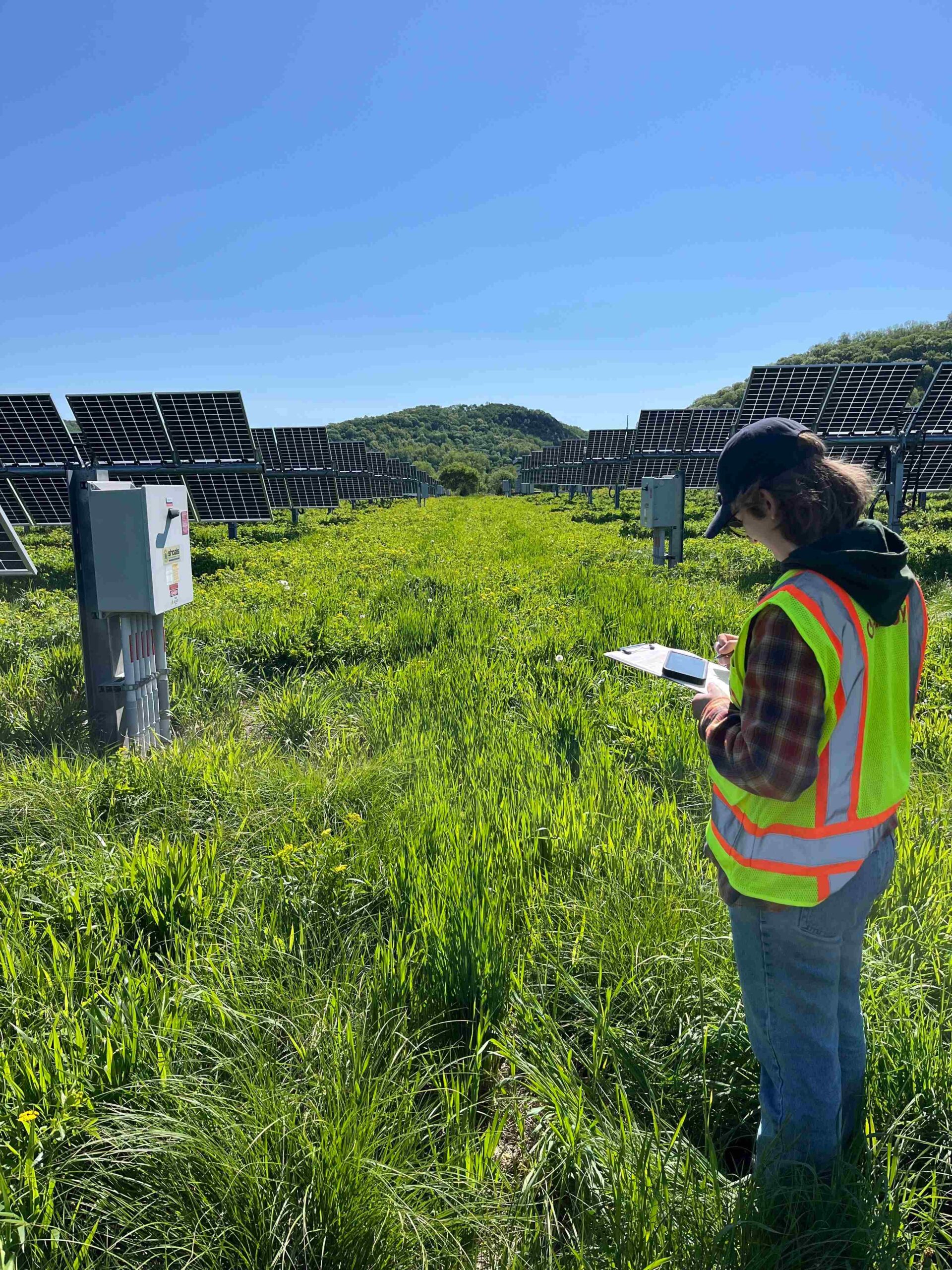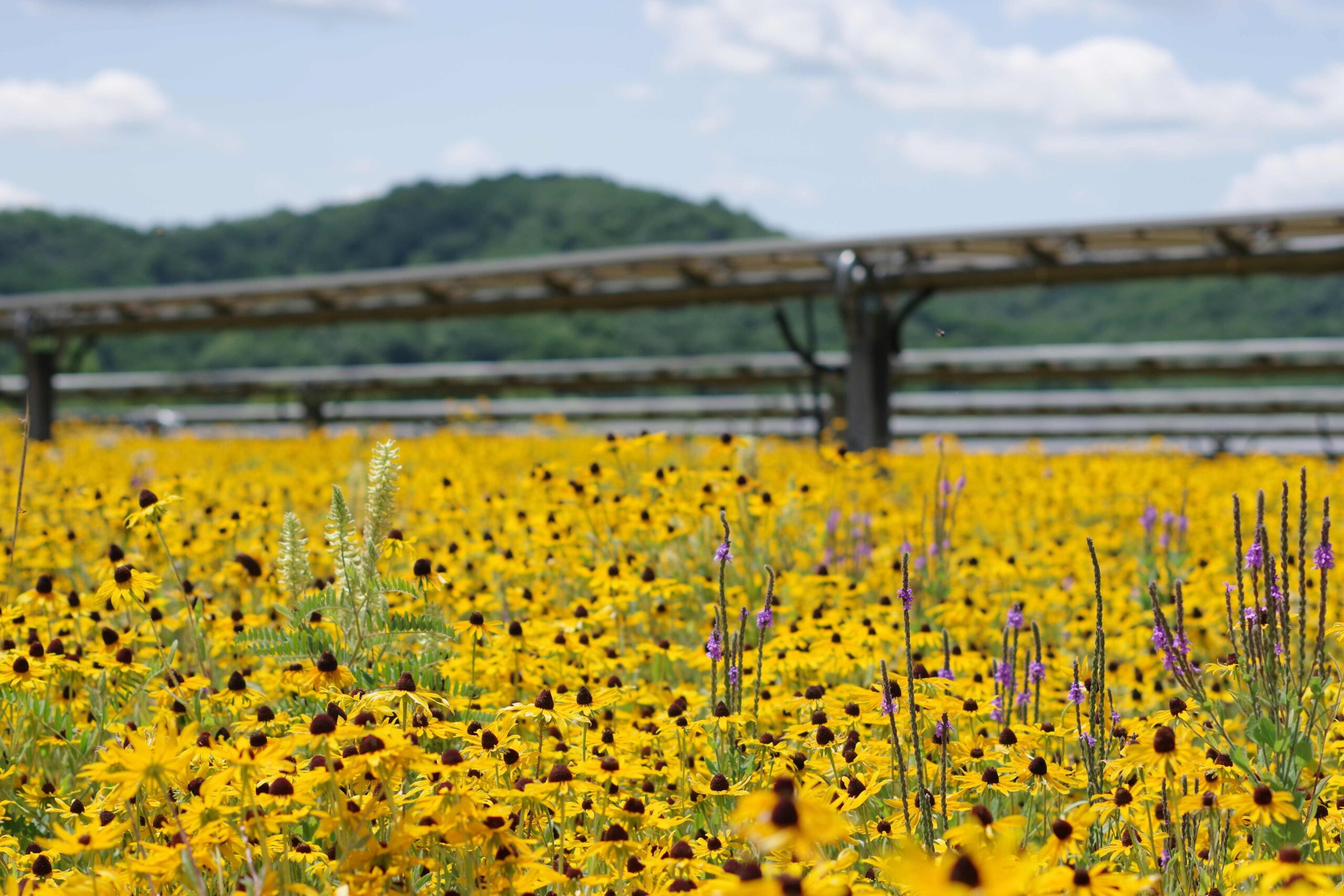
Stockton Solar is located in Winona, Minnesota, a rural community of bluffs and farmland. Stockton was developed by OneEnergy Renewables and constructed in 2021 to provide 2 megawatts of solar power to MiEnergy, a rural electric cooperative. The energy generated at this site feeds local distribution lines to power homes, farms, and businesses in the surrounding community.
Stockton was seeded with a diverse mix of 31 species by Natural Resource Services (NRS), a local ecological restoration company now managing the site using Integrated Vegetation Management principles. NRS designed the seed mix for site-specific conditions, along with a wet prairie mix of 20 species for the retention basin. These species were selected for their value to pollinators and to replicate the native Minnesota prairie biome. Additionally, a visual screen of evergreens, serviceberry, and highbush cranberry was planted alongside the project. In 2026, Minnesota Board of Water and Soil Resources certified that Stockton meets the Minnesota Habitat Friendly Solar Program Standard.
Monarch Joint Venture, a nonprofit dedicated to monarch butterfly conservation, uses the site to pilot machine learning with drone imagery to identify milkweed plants. Along with plant survey data collected on the ground, this could provide a way to quickly assess habitat quality for monarchs.
It takes time to establish a prairie. Extra care and attention are essential during the first 2-3 years as annual and biennial weeds germinate. However, each year, the joy that comes from finding new species growing from the seed mix makes up for the heavy investment of time and energy during the early years. We are eager to see the solar prairie grow more diverse over the years, and with it the return of the birds, insects, and other wildlife native to this habitat.
OneEnergy is excited to learn more about which bird species are making use of this unique habitat by setting up acoustic monitoring devices to record bird songs. We’re curious about whether the solar prairie will attract more grassland or savanna species.
Our team is also interested in inviting ecologists to visit and survey the biodiversity at these sites. This can include students and citizen scientists who can help identify plants and animals on site while also experiencing what it’s like to walk through a solar prairie. We welcome researchers to test ideas for improving habitat for wildlife at solar facilities.
OneEnergy is actively seeking new partnerships and would appreciate support with planning and guiding tours and BioBlitzes. We believe this opportunity to combine renewable energy generation with conservation can shift perceptions of solar land use and encourage people to promote this approach for future solar projects in their communities.