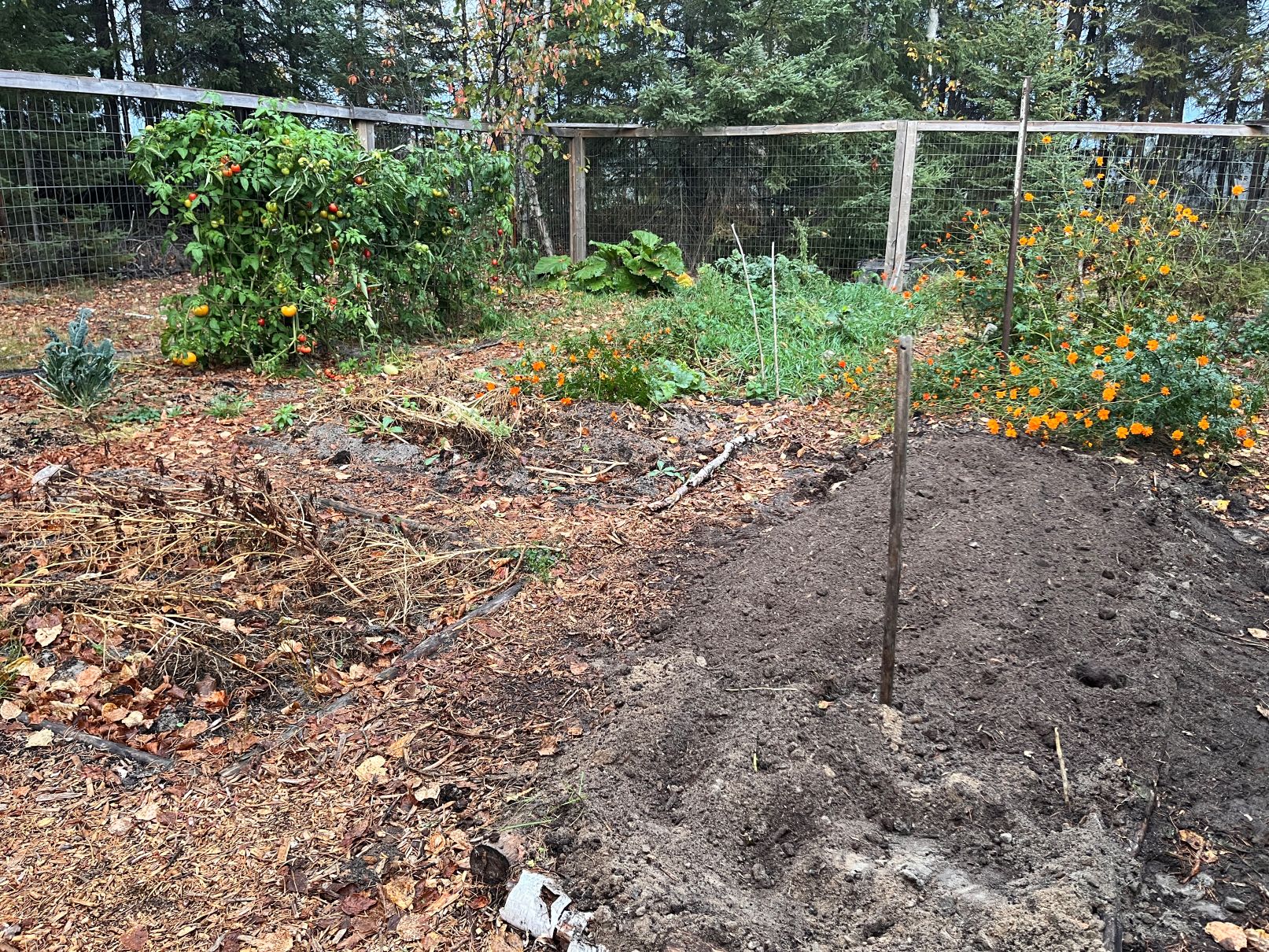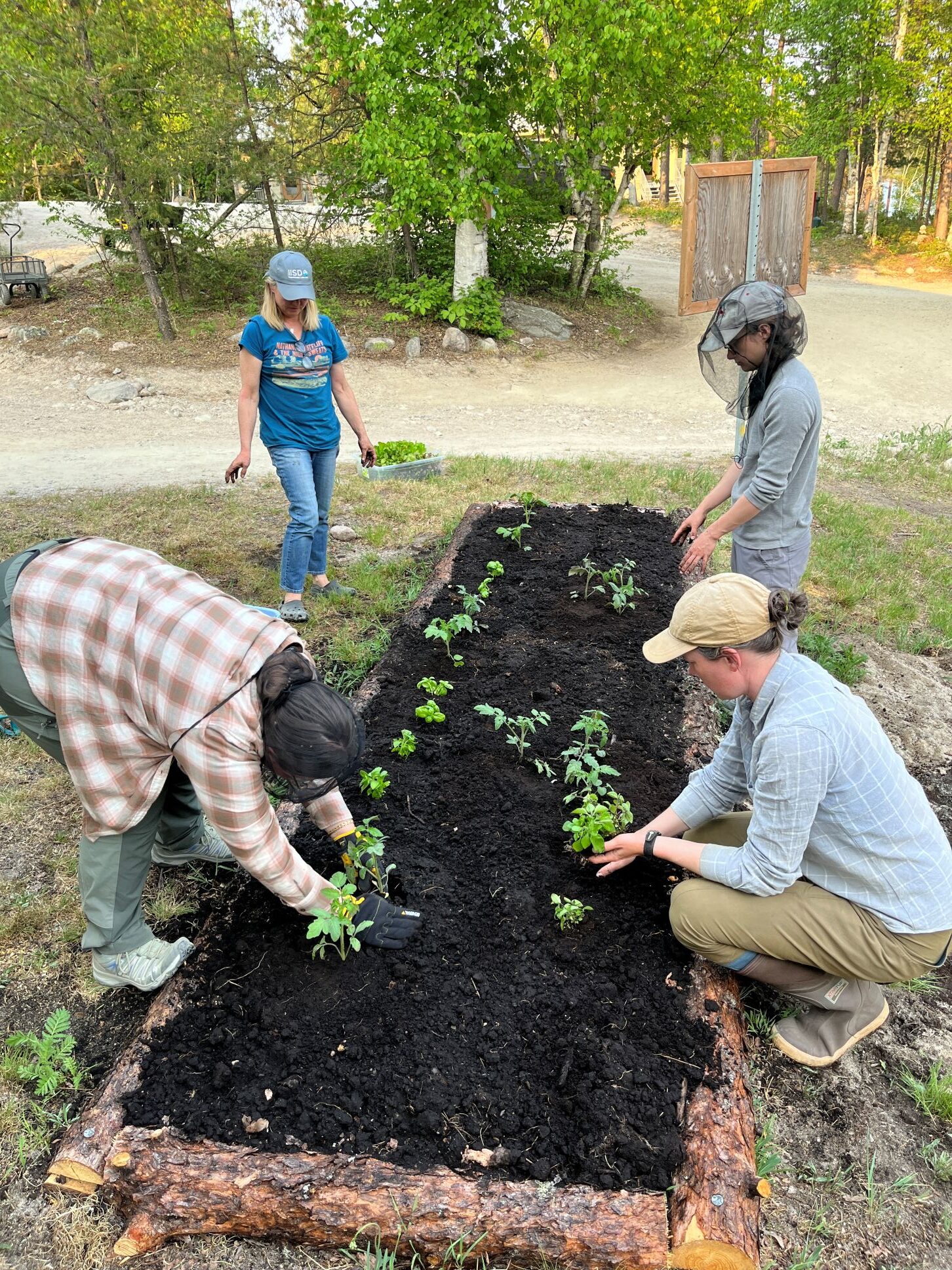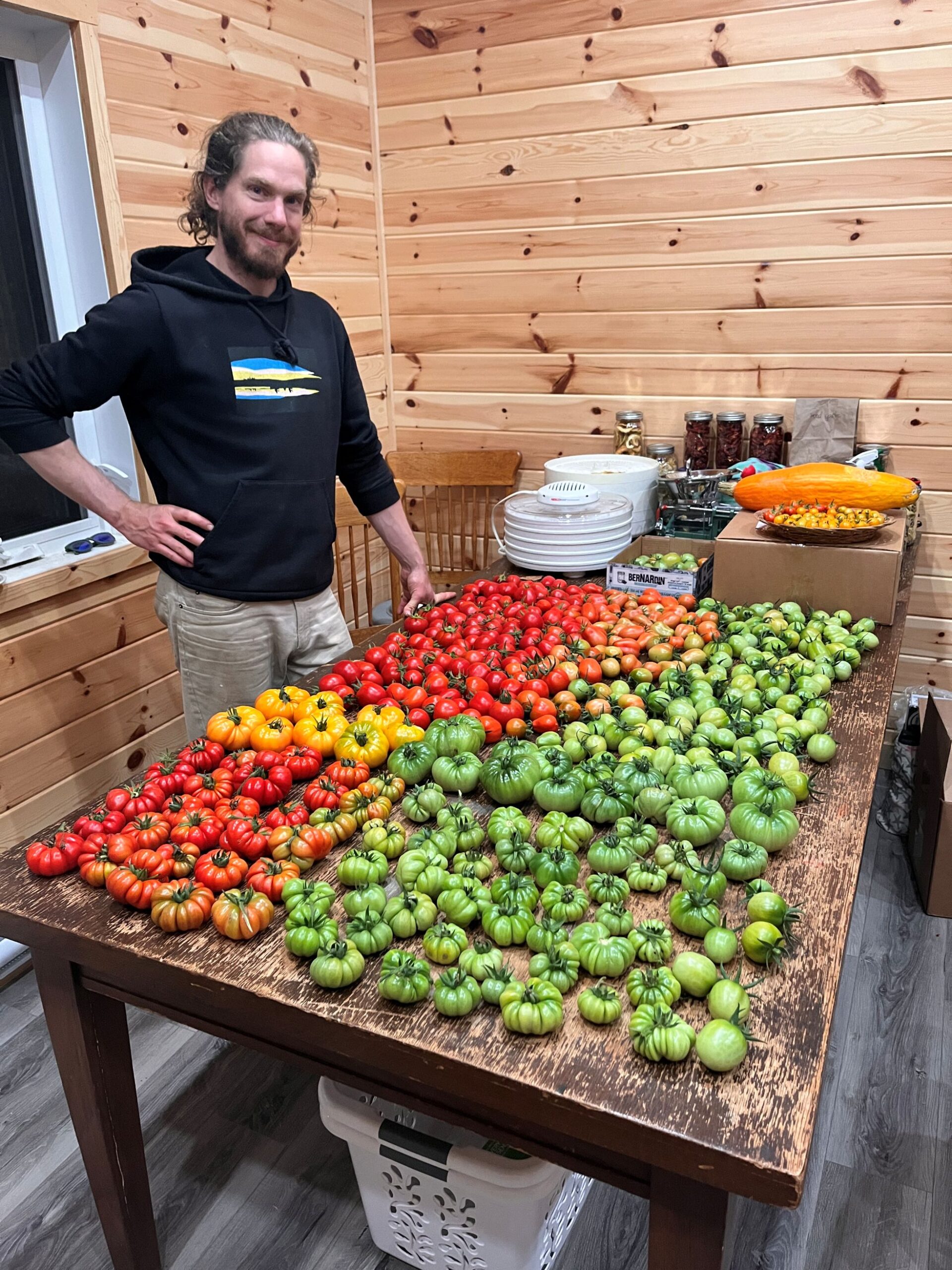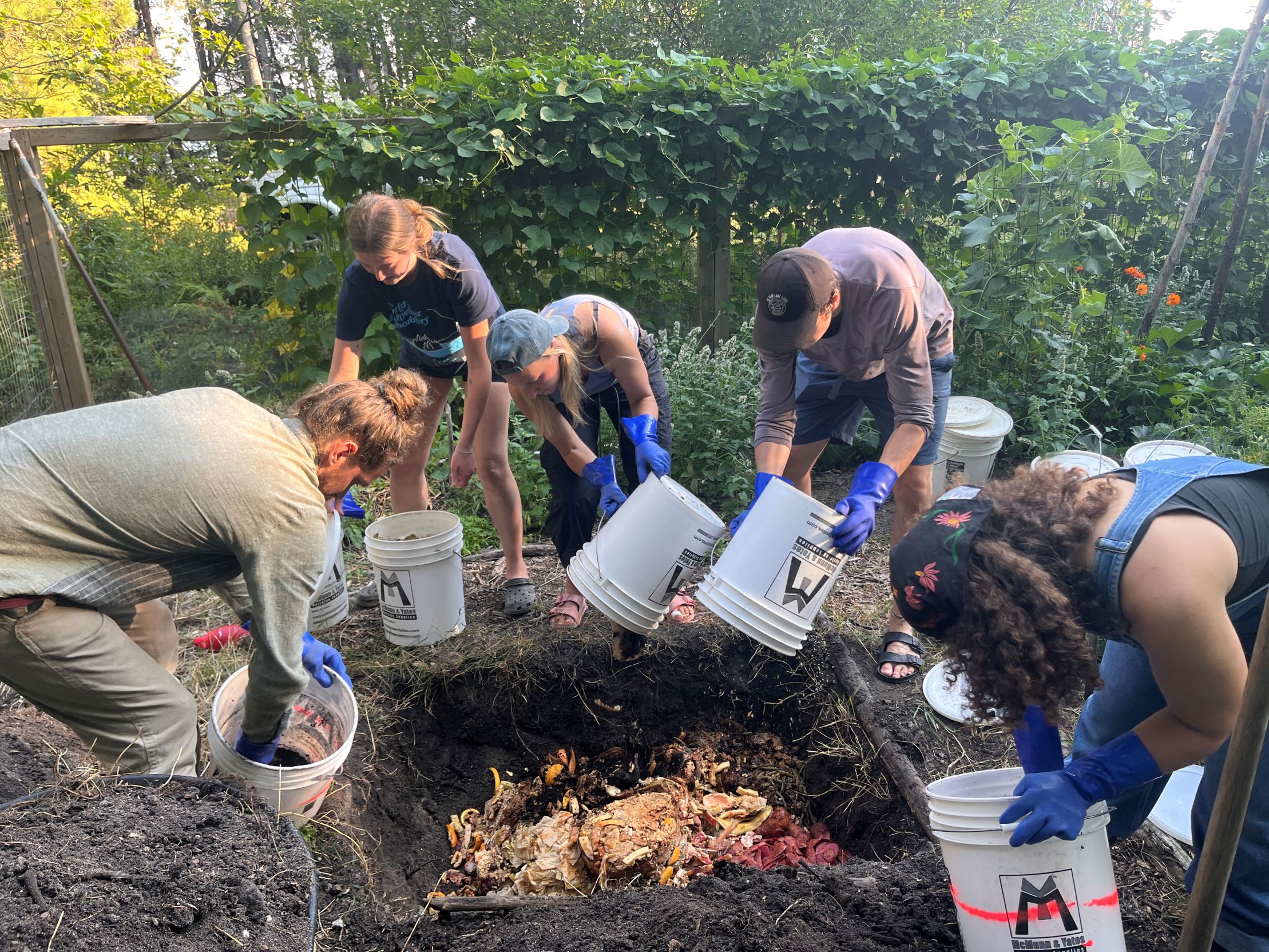
Our garden eats pizza! Our remote field camp houses up to 60 aquatic field researchers at a time who work together to study human impacts on lakes. Historical conventional composting attempts at the camp were brief due to wildlife attraction/interference, so food waste was sent to the local landfill weekly for many years. Two of our biologists started using the bokashi method of composting at home and decided to try to scale it up for the camp, to great success! With the cooperation of our kitchen staff, we are now in our 6th year of responsibly dealing with all of our food waste on-site through bokashi fermentation. The advantages of bokashi over conventional backyard composting are that it can accept all types of organic wastes (including bread, meat, fat, napkins, pizza, etc.), it keeps the carbon in the ground, and it does not attract wildlife. As a bonus, it feeds the garden, which in turn feeds the hungry field researchers. We bury about 150 L of bokashi per week / 3500 L of bokashi per year in our camp gardens (~60 m2 garden space). The act of burying is a weekly community event made easier by the contributions of many hands, and everyone gets to eat the abundant garden produce! We are thrilled that this type of regenerative approach is working for us, and are excited to educate folks about adapting this method to their lives.