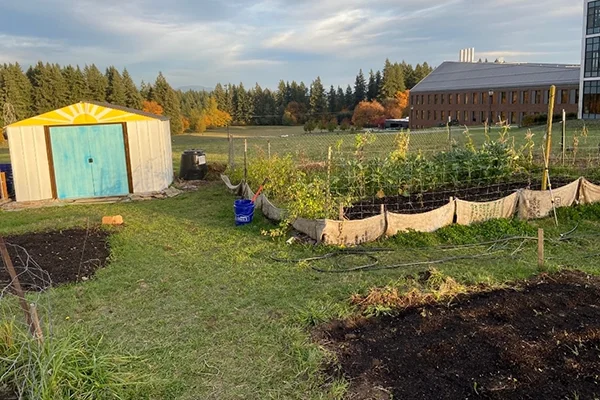
The inspiration for the garden stemmed from a desire to heal the land damaged by harmful farming practices by reconnecting with ITEK techniques. Our primary goals are cultural reclamation, the return home of our plant relatives, medicines, first foods, languages, and to combat food insecurity. The garden originated from our Native American Community Advisory Board, historic land uses associated with WSUV, and oral histories of the Columbia River Valley located between temperate coastal ranges and the love triangle of Loowit (Mount St. Helens), Wy’east (Mount Hood) and Pahto (Mt. Adams).
The work began in 2024 with soil samples and remediation, nitrogen rich cover crops, designated plots, irrigation system, and plants that were specifically chosen for their uses like qemes, elderberry, salmonberry, salal, and Quinault strawberry. By integrating the garden into classes across the curriculum as an outdoor classroom, we reclaim our identity by re-establishing the natural lifeways to the land, traditional foods, and medicines that have sustained Indigenous peoples since time immemorial. The return home of ITEK practices focused on regenerative ecosystems define us as a simsik community.
The community garden, Camas prairie, and native signage represent first steps toward the goal of re-Indigenizing WSUV’s 351-acre campus centering food sovereignty and food justice across the curriculum, strengthening the involvement of Tribal Nations in the life of campus, promoting climate resilience, and opening new opportunities and spaces for Indigenous art and culture, while researching the impact on the retention of Indigenous students, faculty, and access to first foods and medicines. We are looking to the garden as a Hub to cultivate seeds, bulbs, and starts for broader distribution to the community.
Our dream is tit’ulł simsik––meaning return home to the land called simsik that WSU Vancouver resides upon, in the Cowlitz language. The return homecoming is a celebration of medicines, plant relatives, cultures and languages, and ecological cultural knowledges to the land and peoples of the Lower Columbia River that it was born from since time immemorial. This is significant for cultural and tribal sovereignty of the tribes and one way for WSU to honor the Morrill Act designation.
Our team includes: Native American Programs, Native American Community Advisory Board, WSUV Office of the Chancellor, the Cowlitz Tribe of Indians, Collective for Social and Environmental Justice, Associated Students of WSUV, Heritage Farms-Clark County-WSU extension, SNAP-Ed, Clark County Public Health, Master Gardener Foundation, and Wisdom of the Elders Inc.
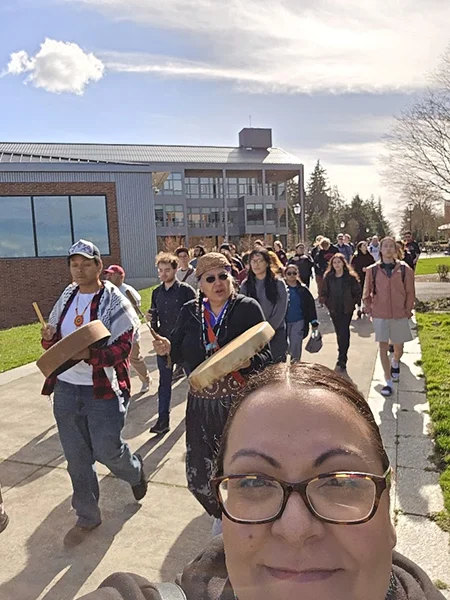
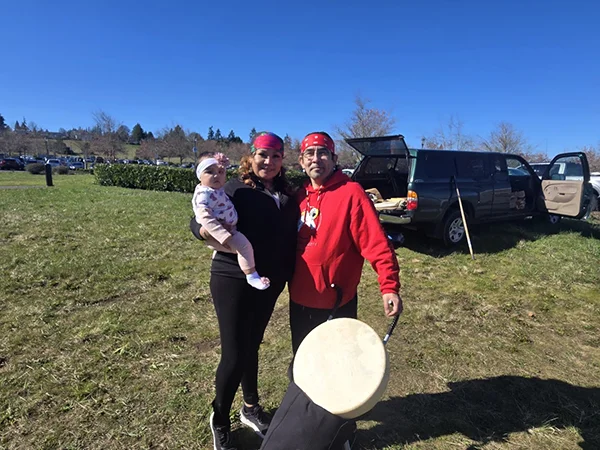
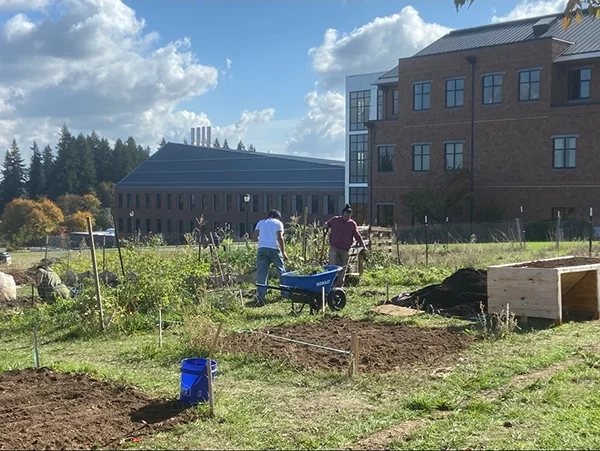
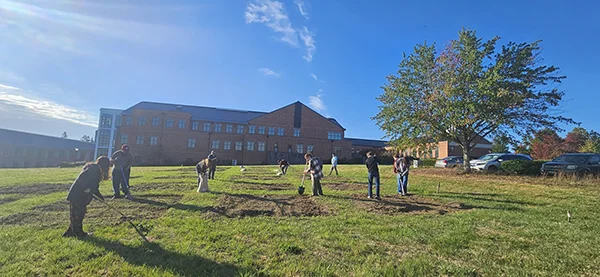
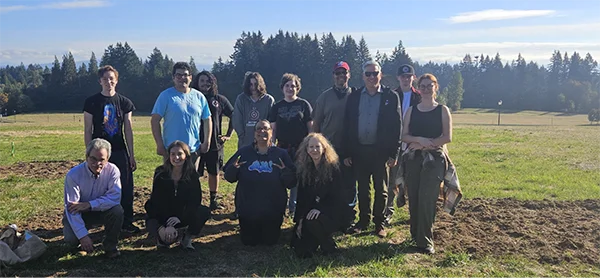
Featured Image: tit’ulł simsik Community Learning Garden food plots.
Upper Left: Singing to the garden to honor the land and plant relatives.
Upper Right: Walptaiksha Drum, Domin Arthur (left) holding granddaughter Ulee, Timothy Burns (right).
Middle: Students planting in the garden.
Bottom: Garden students (standing), and faculty Paul Thiers, Chelsea Kopp, Julian Ankney, Desiree Hellegers (kneeling).
Learn more: https://labs.wsu.edu/csej/campus-learning-garden/