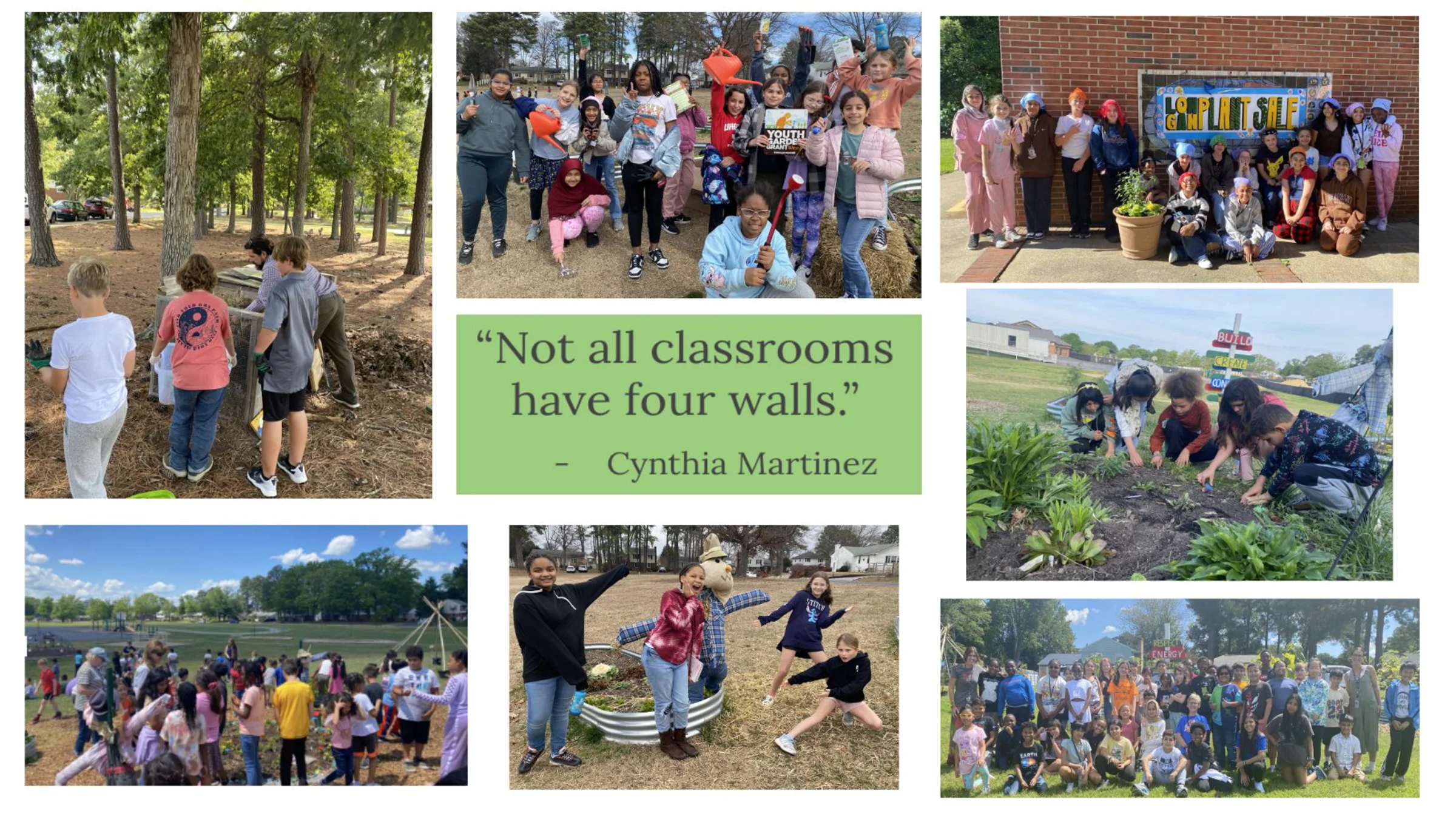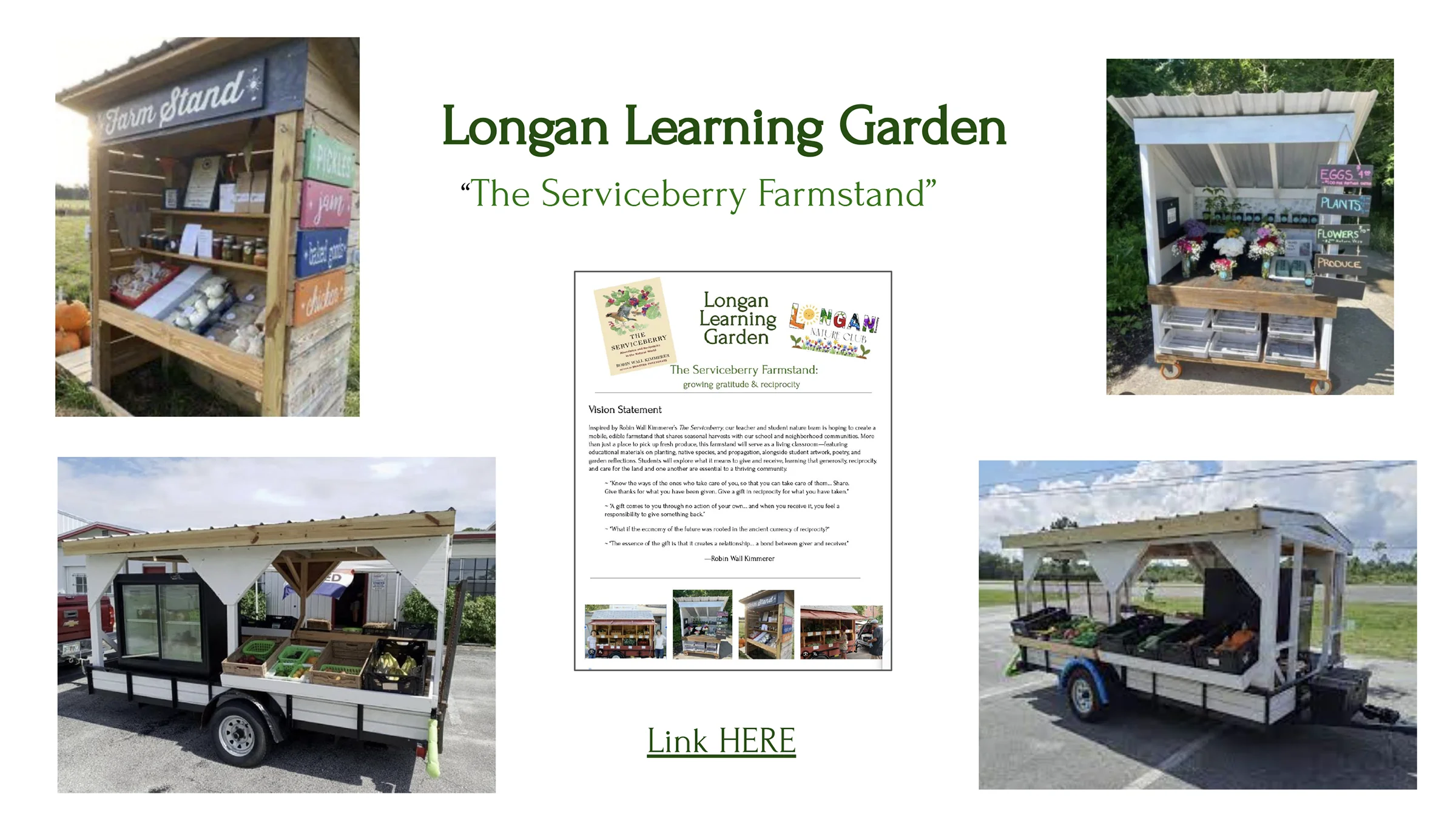
Inspired by Robin Wall Kimmerer’s “The Serviceberry,” our teacher-student nature team is working to create a mobile, edible farmstand that brings seasonal harvests to our school and surrounding community. More than a spot to pick up produce, the Serviceberry Farmstand will be a hands‑on learning space with planting guides, native plant profiles, propagation demonstrations, pollinator and composting resources, and a student‑run seed library. Students will help shape the space by adding recipes, artwork, poetry, garden journals, and short videos that celebrate food traditions, creativity, and community care.
As the first step toward our possible Outdoor Learning Center (see below), the Serviceberry Farmstand supports our mission to connect students with the natural world through real‑world, curiosity‑driven learning. This project gives students meaningful ways to practice environmental stewardship, build sustainability skills, and collaborate on work that supports Virginia Standards of Learning (SOL) content. By weaving food, culture, and ecological understanding into daily school life, the farmstand will help grow confident, responsible young people who understand their role in caring for their communities and the planet. We’ve received grant support for the learning‑garden components and are now seeking funding to build the farmstand cart—and ideally a small trailer—to make the project fully mobile.
Last year, I shared a proposal for our school division and county to partner in creating an Outdoor Learning Center on our campus—a space where students could explore and connect with nature through immersive, hands‑on learning. The vision is to give students real opportunities to practice environmental stewardship, sustainability, and curiosity‑driven discovery. It’s an exciting idea, and if it moves forward, it will require time, collaboration, and thoughtful planning to bring to life. The Serviceberry Farmstand would serve as our first step toward making that larger vision a reality.