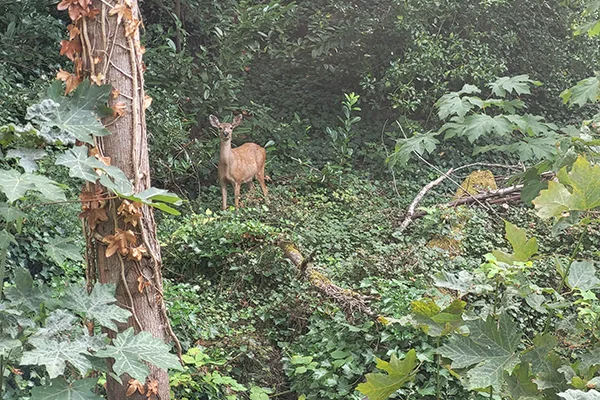
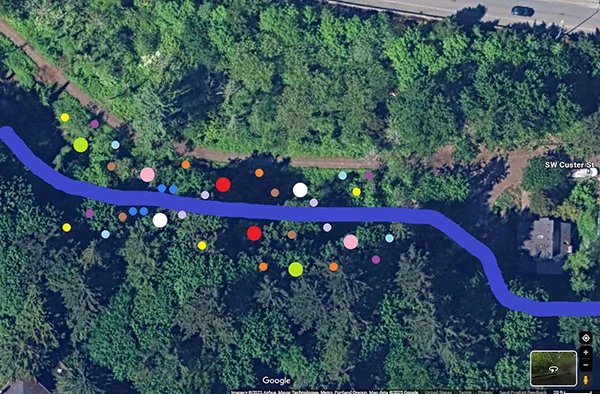
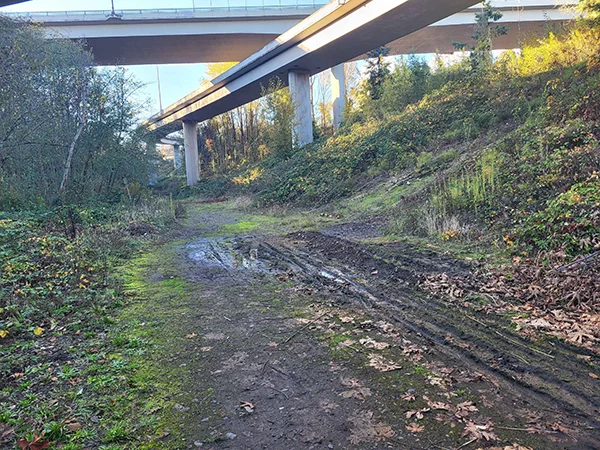
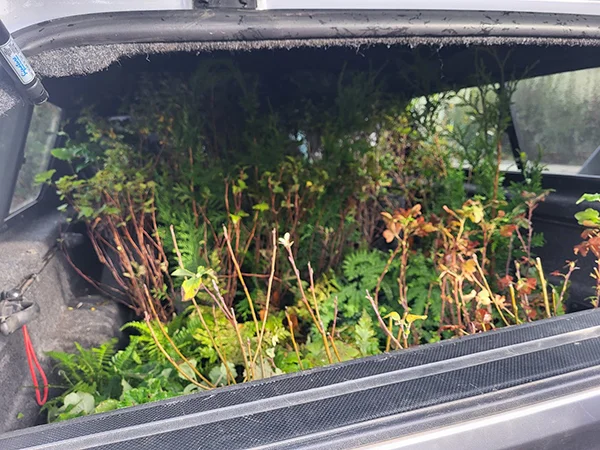
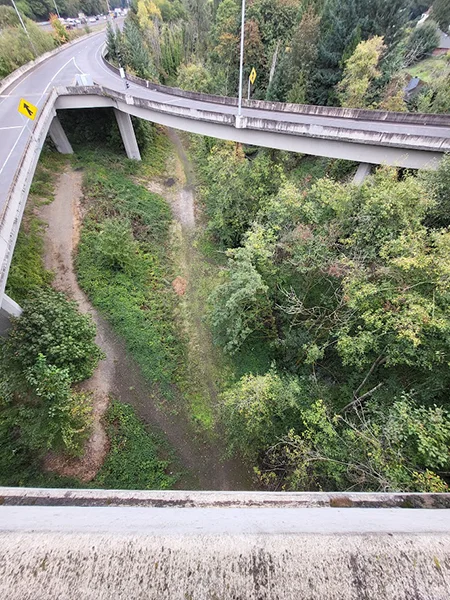
We are working under an interstate on-ramp to I-5 in SW Portland. Inspired by classes about restoring the bioregion in the Design School for Regenerating Earth as well as Social Forestry classes at Lost Valley Education Center, we walked our neighborhood and started asking questions about the ten acres of land under the freeway. We started working to get permits for non-native plant removal, trash pickup, and planting in December 2024 and received the permits in March 2025. Since then, we have planted more than 40 trees and 60 other native plants with the help of more than 50 volunteers.
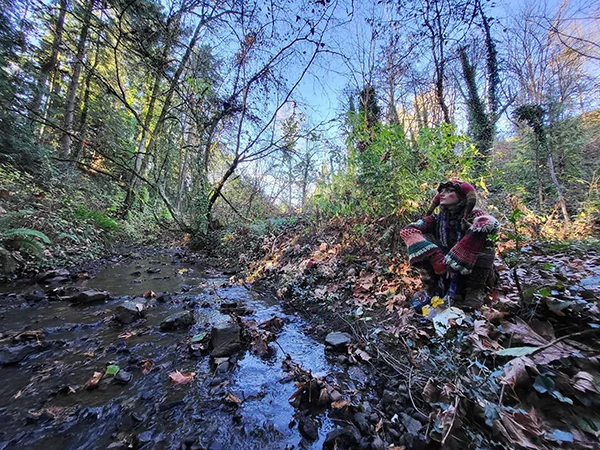
In addition to caring for the wildlife and the existing native plants, we have pulled the community together around something we all care about. We have stretched, sung songs, created altars, given gifts, made ivy baskets, and eaten food together in a place that neighbors once described as “sketchy.” We use the opportunity to educate neighbors about native plants as well as how to have compassion for our unhoused neighbors.
Our project has inspired other permaculture enthusiasts to adopt Department of Transportation land and weave their communities together across the United States and Canada.
We (a volunteer team at Regenerate Northern Willamette Valley) are currently in partnership with Westside Watersheds, Fulton Community Garden, South Burlingame Neighborhood Association, and the South Burlingame Neighborhood Emergency Team (SBNET), who have supplied volunteer labor and tools. Some community members from the mutual aid group, Community Unconditionally Taking care of Each other (C.U.T.E.), have supported this project and outreach to houseless neighbors.
We plan to renew our permits in March and expand to the rest of the State land in the area, which will help us root out hyperabundant plants upstream. We will also keep talking to neighbors and other community groups to build momentum for the project. Additionally, we hope to partner with students at Portland State University to do some soil testing and remediation.

Learn more at https://willamette.earth/wiki/Stephens_Creek