An essay by Dr. Gary Paul Nabhan, author and restoration ecologist.
Plant communication and cognition is deservedly getting the attention that it is due these days, but one simple fact has escaped being clarified to the many aficionados deeply interested in this topic.
The most widespread means by which plants, microbes and animals (including us!) communicate across species is by chemical signals, and most pervasively as those signals we characterize as “fragrance” in our own osmocosm or umwelt. That’s right—not by sight, sound, electromagnetic vibrations, taste or texture, but by aromatic volatile oils and kindred biochemicals that we call smell. The panoply of plant and animal scents we perceive as lures, repellents or warning signals may be the most “volatile” vocabulary of interspecific communication.
That might astound most of us plant lovers, because we tend to overemphasize visual beauty even though we are just as touched by what I call olfactory beauty. After all, we know that nocturnal and subterranean mammals not too different from us rely primarily on scent—not sight—to navigate their worlds.
Several years ago, I was propelled out of my chronic over-reliance on vision at the expense of olfaction by a serious concussion that left me seeing triple vision, hallucinations and blackouts that profoundly disoriented me. But at the same time, somewhat to my relief, I experienced a synesthetic shift that made me feel as though my sense of smell was amplified many times over. I could smell flowers blooming or aromatic leaves from thirty feet away. This heightened sensitivity made me appreciate that I live in one of the most aromatic biomes on the planet, where dozens of different desert plants work like a symphony orchestra to emit a dizzying array of different volatiles whenever a summer monsoon drenches the desert.
Why is the desert so fragrant? Volatile oils on the surface of their leaves protect them from desiccation during drought and from intense solar radiation during heat waves. Other compounds defend against destructive browsing when both invertebrate and vertebrate critters can find little else to eat.
Of course, we are the “incidental beneficiaries” if not the “innocent bystanders” who get to revel in that Hallelujah Chorus of polyphenols, sesquiterpenes and alkaloids as we stand ecstatic, dripping wet in our favorite desert, grassland, forest or savanna sanctuary when it rains. Some of those volatiles almost immediately begin to drop our cortisol stress levels; others ride onto our skin on the “backs” or “wings” of aerial microbes that then boost our immune systems, reduce our allergic responses and keep us more alert to the wonders of the world. Through refreshing us, these plants, microbes and animals begin to “re-story” our lives with hope and wonder, energizing our hands-on efforts to restore the land, rivers, marshes and seacoasts.
Perhaps the humans among us who benefit most from the health-giving properties of aromatic plants and endophytic microbes borne in flowers and leaves are those involved in hands-on biocultural restoration efforts, such as Plant Baby Plant initiatives. It is, as Robin Kimmerer has deftly described, reciprocal restoration, for as we heal damaged habitats by transplanting seedlings, tossing seed pellets, and sowing good trouble with mycorrhizal inocula, we are having our wounded bodies, minds, hearts and spirits restored and guided toward the on-ramp to recovery. For many of us with diverse cultural backgrounds, fragrance is a sign of the palpable presence of the Spirit; that’s why incense and smudging are part of so many sacred rites.
That’s why Plant Baby Plant seems to me to be the very gesture we most need in this moment of Planetary Chaos: it is a selfless, collaborative salve to help us heal the wounds caused by selfishness and anthropocentric mean-spiritedness. It gives us what I call the cultural antibodies to resist the diseases that are being spread by wrong-headed politicians, business promoters of hostile takeovers, and developers who literally ARREST the natural development of already precious lands. It helps us restore natural sanctuaries that can serve as sacred refuges for the most humble of our neighbors, human and other-than-human alike. To me, the mantra of Plant Baby Plant is a chant we all need to hear, and a fragrance we all need to inhale to inspire our lives.

Gary Paul Nabhan is an interaction ecologist, ethnobotanist, practicing desert restorationist, and contemplative, interfaith Franciscan Brother. His forthcoming book with much ado about fragrance is Water in the Desert: A Pilgrimage, due out from Milkweed Editions in May of 2026. No earthly fragrances were harmed in the writing of this essay.
Author Photo Credit: Dennis Maroney
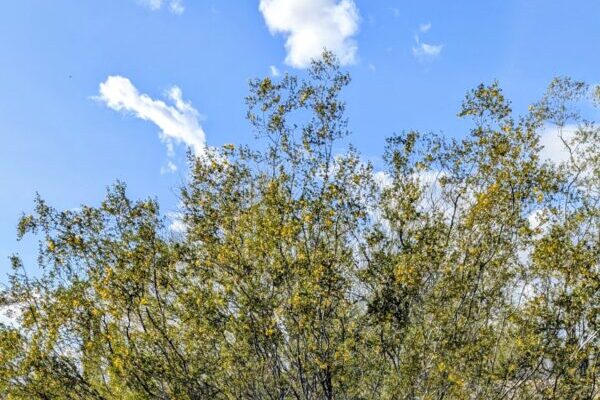
Featured image: The richly aromatic Creosote bush (Larrea tridentata). Photo Credit: Ann Siqveland